Hey there! As a supplier of high strength steel plates, I often get asked about the heat treatment process for these bad boys. So, I thought I'd take a few minutes to break it down for you in a way that's easy to understand.
First things first, what exactly is heat treatment? Well, it's a process that involves heating and cooling steel in a controlled manner to alter its physical and mechanical properties. When it comes to high strength steel plates, heat treatment is crucial because it helps to enhance the steel's strength, hardness, toughness, and ductility.
Let's dive into the different types of heat treatment processes commonly used for high strength steel plates.
Annealing
Annealing is a heat treatment process that involves heating the steel plate to a specific temperature and then cooling it slowly. This process reduces internal stresses, increases ductility, and improves machinability.
There are different types of annealing:
- Full Annealing: The steel is heated above its critical temperature, held there for a period of time to allow for complete transformation of the microstructure, and then cooled slowly in the furnace. This results in a soft, ductile steel with a uniform grain structure.
- Spheroidizing Annealing: This is used mainly for high - carbon steels. The steel is heated at a specific temperature range and held for a long time to convert the carbide in the steel into a spherical shape. This improves the formability of the steel.
Normalizing
Normalizing is similar to annealing, but it involves air - cooling instead of slow furnace - cooling. The steel plate is heated above its critical temperature and then allowed to cool in air. This process refines the grain structure of the steel, improves its strength and toughness, and reduces residual stresses. Normalizing is often used as a pre - treatment for other processes like quenching and tempering.
Quenching
Quenching is a rapid cooling process where the steel plate is heated to a high temperature and then quickly cooled by immersing it in a quenching medium, such as water, oil, or polymer solutions. The rapid cooling causes the formation of a hard and brittle microstructure called martensite.
However, quenching alone can make the steel too brittle for most applications. That's where tempering comes in.
Tempering
After quenching, tempering is carried out to reduce the brittleness of the martensitic steel. The quenched steel plate is reheated to a temperature below its critical temperature and held for a specific time, then cooled at a controlled rate. Tempering improves the ductility and toughness of the steel while still maintaining a relatively high level of strength.
Case Hardening
Case hardening is a process used to create a hard outer layer (case) on the steel plate while keeping the core soft and tough. This is especially useful for components that need to resist wear and fatigue on the surface, such as gears and shafts.
There are different methods of case hardening, including carburizing, nitriding, and carbonitriding.
- Carburizing: The steel is heated in a carbon - rich environment, typically at temperatures between 850 - 950°C. Carbon diffuses into the surface of the steel, increasing its carbon content. After carburizing, the steel is quenched and tempered to harden the carburized layer.
- Nitriding: In nitriding, nitrogen is introduced into the surface of the steel at relatively low temperatures (usually 480 - 650°C). This forms a hard nitride layer on the surface, which provides excellent wear and corrosion resistance.
Now, let's talk about some of the high strength steel plates we offer and how heat treatment plays a role in their properties.
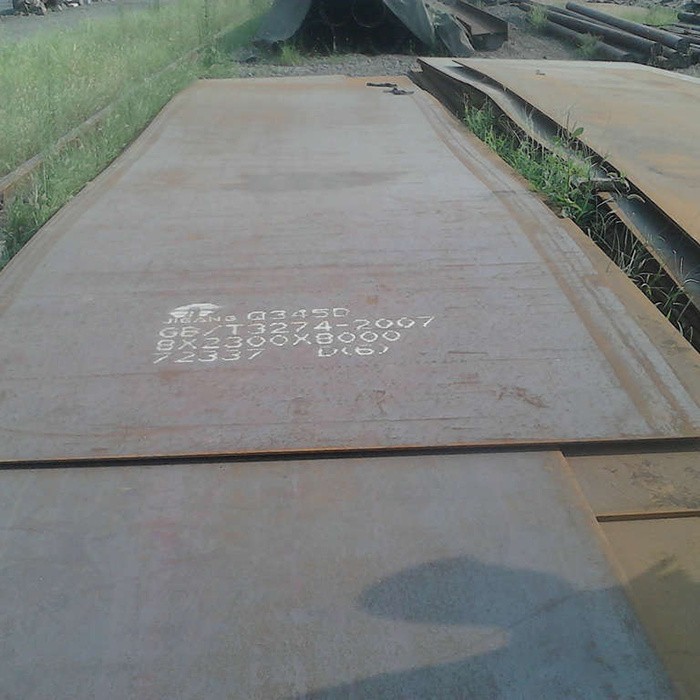

We have the ASTM A514 Alloy Steel Plate. ASTM A514 is a high - strength, quenched, and tempered alloy steel plate. The heat treatment of this steel is carefully controlled to achieve excellent strength and toughness properties, making it suitable for applications in the construction, industrial equipment, and automotive industries.
Another great option is the S460ml High Strength Low Alloy Steel. This steel is often heat - treated through normalizing or a combination of quenching and tempering. The heat treatment process enhances its strength, weldability, and resistance to atmospheric corrosion.
And then there's the ASTM A514 Steel Plate. Just like its alloy counterpart, it undergoes a strict heat treatment regime to ensure it meets the high - strength requirements of various industries.
So why is heat treatment so important for these high strength steel plates? Well, it allows us to customize the properties of the steel according to the specific needs of our customers. Whether you need a steel plate that's super strong and tough for heavy - duty construction, or one that's wear - resistant for industrial machinery, we can fine - tune the heat treatment process to get the right balance of properties.
If you're in the market for high strength steel plates, and you're looking for a supplier who understands the ins and outs of heat treatment, you've come to the right place. We've got the expertise and experience to provide you with top - quality steel plates that are tailored to your requirements.
Don't hesitate to reach out if you have any questions about our products, the heat treatment processes, or if you're ready to start a procurement discussion. We're here to help you get the best high strength steel plates for your projects.
References
- ASM Handbook Committee. (2017). ASM Handbook, Volume 4: Heat Treating. ASM International.
- Degarmo, E. Paul, Black, J. T., & Kohser, Ronald A. (2003). Materials and Processes in Manufacturing. John Wiley & Sons.