

As a supplier of 304 stainless steel pipes, I've encountered numerous inquiries about the brittleness of these pipes at low temperatures. This topic is crucial for industries where 304 stainless steel pipes are used in cold environments, such as refrigeration, cryogenic storage, and some outdoor applications in cold regions. In this blog, I'll delve into the factors contributing to the brittleness of 304 stainless steel pipes at low temperatures and discuss ways to mitigate potential issues.
Understanding 304 Stainless Steel
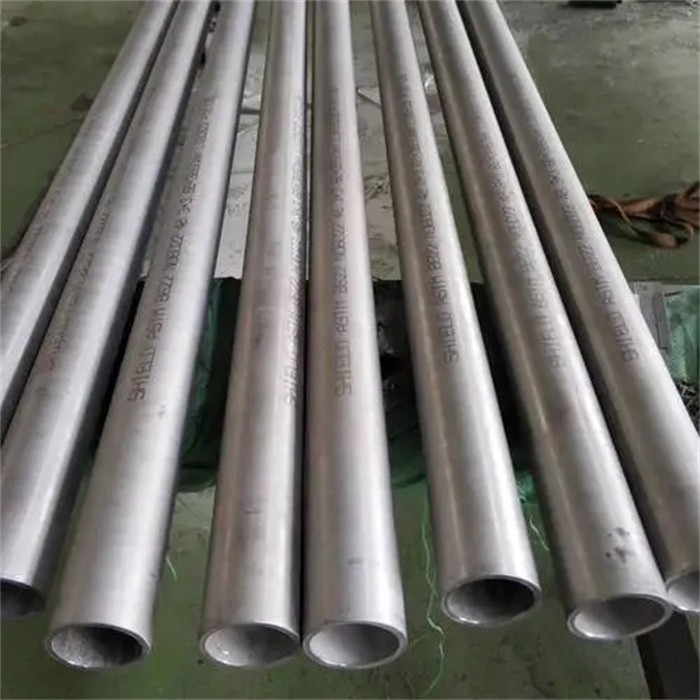
Before we discuss brittleness, let's briefly understand what 304 stainless steel is. 304 stainless steel is one of the most commonly used grades in the stainless - steel family. It contains approximately 18% chromium and 8% nickel, which gives it excellent corrosion resistance, formability, and weldability. Due to these properties, it is widely used in various industries, including construction, food processing, and automotive.

Brittleness at Low Temperatures
The Concept of Ductile - Brittle Transition
Metals generally have a ductile - brittle transition temperature (DBTT). Above this temperature, the metal behaves in a ductile manner, meaning it can deform plastically before fracture. Below the DBTT, the metal becomes brittle and fractures with little or no plastic deformation. For 304 stainless steel, the DBTT is relatively low compared to some other metals, but it still exists.
Factors Affecting Brittleness
- Chemical Composition: The exact chemical composition of 304 stainless steel can influence its low - temperature brittleness. For example, small amounts of impurities such as sulfur and phosphorus can increase the likelihood of brittleness. Sulfur forms sulfide inclusions, which can act as stress concentrators and initiate cracks at low temperatures.
- Microstructure: The microstructure of 304 stainless steel also plays a role. Austenitic stainless steels like 304 are generally considered to have good low - temperature toughness. However, if the microstructure contains martensite (a hard and brittle phase), it can significantly reduce the ductility of the material at low temperatures. Martensite can form during cold working or welding processes.
- Cold Working: Cold working, such as rolling or drawing, can increase the strength of 304 stainless steel pipes. However, it can also introduce residual stresses and change the microstructure, potentially increasing the brittleness at low temperatures. The degree of cold working and the subsequent heat treatment (if any) are important factors to consider.
- Welding: Welding is a common process in the installation of stainless - steel pipes. The heat affected zone (HAZ) in welded joints can have a different microstructure compared to the base metal. In some cases, the HAZ may be more prone to brittleness at low temperatures. For more information on welding stainless - steel pipes, you can visit Mig Welding Stainless Steel Pipe.
Testing for Low - Temperature Brittleness
To ensure the performance of 304 stainless steel pipes at low temperatures, various testing methods can be employed.
Charpy Impact Testing
The Charpy impact test is a widely used method to evaluate the toughness of materials at different temperatures. In this test, a notched specimen is struck with a pendulum, and the energy absorbed during fracture is measured. By conducting Charpy tests at different temperatures, the DBTT of the 304 stainless steel can be determined.
Tensile Testing
Tensile testing at low temperatures can also provide valuable information about the ductility and strength of the material. The elongation and reduction of area at fracture are important parameters to assess the material's ability to deform plastically at low temperatures.
Mitigating Brittleness
Material Selection
When selecting 304 stainless steel pipes for low - temperature applications, it is important to choose high - quality materials with low impurity levels. Some suppliers offer specially formulated 304 stainless steel with improved low - temperature properties. You can find a range of high - quality De Acero 304 Stainless Steel Tube Pipe options that are suitable for different applications.
Heat Treatment
Heat treatment can be used to relieve residual stresses and improve the microstructure of 304 stainless steel pipes. Annealing, for example, can restore the ductility of the material by reducing the internal stresses and homogenizing the microstructure.
Design Considerations
In the design of systems using 304 stainless steel pipes at low temperatures, it is important to minimize stress concentrations. Sharp corners, notches, and sudden changes in cross - section can all act as stress raisers and increase the risk of brittle fracture. Using smooth transitions and proper support structures can help distribute the stress more evenly.
Comparison with Other Stainless - Steel Grades
304 stainless steel is often compared with other stainless - steel grades, such as Sa213 Tp316. While both are austenitic stainless steels, 316 has a higher nickel content and contains molybdenum, which gives it better corrosion resistance in some environments. In terms of low - temperature properties, 316 also has good toughness, but the specific performance can vary depending on the application and the exact chemical composition.
Conclusion
The brittleness of 304 stainless steel pipes at low temperatures is a complex issue influenced by chemical composition, microstructure, cold working, and welding. By understanding these factors and taking appropriate measures such as proper material selection, heat treatment, and design considerations, the risk of brittle fracture can be minimized.
If you are in the market for high - quality 304 stainless steel pipes for low - temperature applications, or if you have any questions regarding the performance of these pipes, feel free to contact us. We are committed to providing you with the best products and technical support to meet your specific needs.
References
- ASM Handbook Volume 1: Properties and Selection: Irons, Steels, and High - Performance Alloys.
- ASTM standards related to stainless - steel materials and testing methods.
- Research papers on the low - temperature behavior of stainless steels.


