

Hey there! As a supplier of 201 stainless steel sheets, I've been dealing with these metal wonders for quite a while. One question that often pops up in discussions with clients is about the effect of surface roughness on 201 stainless steel sheets. So, let's dive right into it!
First off, what's surface roughness? Well, it's basically how smooth or bumpy the surface of the 201 stainless steel sheet is. You can think of it like the texture of a piece of fabric. A super - smooth fabric feels nice and sleek, while a rough one might be a bit scratchy. In the world of stainless steel, surface roughness is measured in micrometers (μm).
Now, let's talk about the impact of surface roughness on the appearance of 201 stainless steel sheets. A smooth surface gives off a really high - end, polished look. It reflects light evenly, making the sheet look shiny and new. This is great for applications where aesthetics matter, like in architectural designs or consumer products. For example, if you're using 201 stainless steel sheets for the exterior of a building, a smooth surface will make it look modern and clean. On the other hand, a rough surface might have a more industrial or rustic appeal. It can add a sense of character, which could be perfect for certain artistic or decorative projects.
But it's not just about looks. Surface roughness also plays a big role in the corrosion resistance of 201 stainless steel sheets. Stainless steel gets its corrosion - resistant properties from a thin oxide layer on its surface. A smooth surface allows this oxide layer to form more uniformly. When the surface is rough, there are more crevices and pits. These can trap moisture, dirt, and other corrosive substances. Over time, this can lead to corrosion, especially in harsh environments. For instance, in coastal areas where there's a lot of salt in the air, a rough - surfaced 201 stainless steel sheet might start to rust faster compared to a smooth one.
Another aspect is the friction. A rough surface has higher friction than a smooth one. This can be both an advantage and a disadvantage, depending on the application. If you're using 201 stainless steel sheets in a situation where you need good grip, like in the treads of stairs or the surface of a workbench, a rough surface is ideal. The increased friction helps prevent slipping. However, if you're using the sheets in a mechanical system where parts need to move smoothly against each other, a rough surface can cause more wear and tear. It can also increase the energy required to move the parts, which isn't very efficient.
When it comes to welding and fabrication, surface roughness matters too. A smooth surface is generally easier to weld. The welding process requires a clean and uniform surface for a strong bond. Rough surfaces can have contaminants trapped in the irregularities, which can weaken the weld. Also, during fabrication, a smooth sheet is easier to form and shape. You can get more precise bends and cuts without worrying about the surface roughness causing any issues.

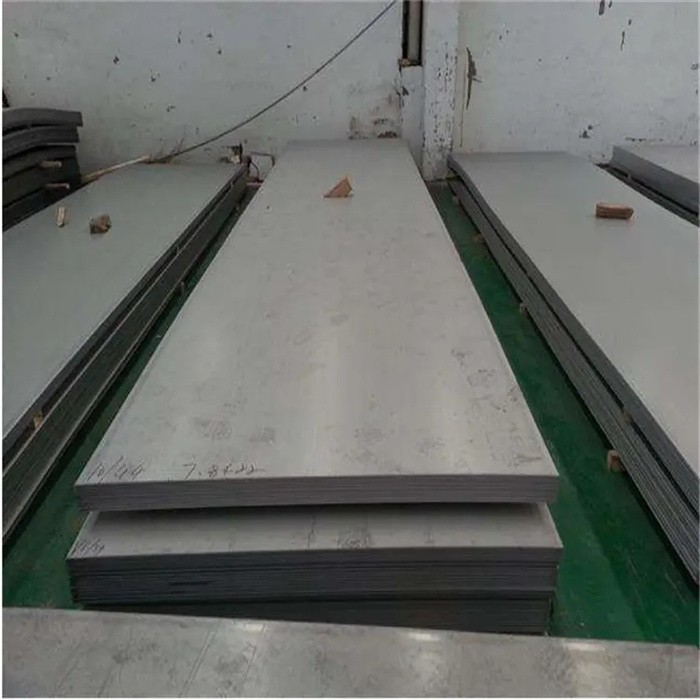
Now, let me tell you a bit about how we control the surface roughness of our 201 stainless steel sheets. We use a variety of methods, such as grinding, polishing, and pickling. Grinding can be used to remove any large bumps or irregularities on the surface. Polishing is then used to achieve a smooth and shiny finish. Pickling helps to clean the surface and remove any impurities, which can also affect the surface roughness.
If you're considering different types of stainless steel products, we also offer 304 Ss Plate, 316 Corrosion Resistan SS Plate, and Aisi 304 Stainless Steel. Each of these has its own unique properties and surface roughness requirements depending on the application.
In conclusion, surface roughness has a significant impact on 201 stainless steel sheets. It affects the appearance, corrosion resistance, friction, and the ease of welding and fabrication. Whether you need a smooth or rough surface depends on your specific application. If you're in the market for 201 stainless steel sheets or any of our other stainless steel products, I'd love to have a chat with you. We can discuss your requirements in detail and find the perfect solution for your project.
References
- ASM Handbook Volume 13A: Corrosion: Fundamentals, Testing, and Protection
- Stainless Steel - A Practical Guide by John D. Verhoeven


